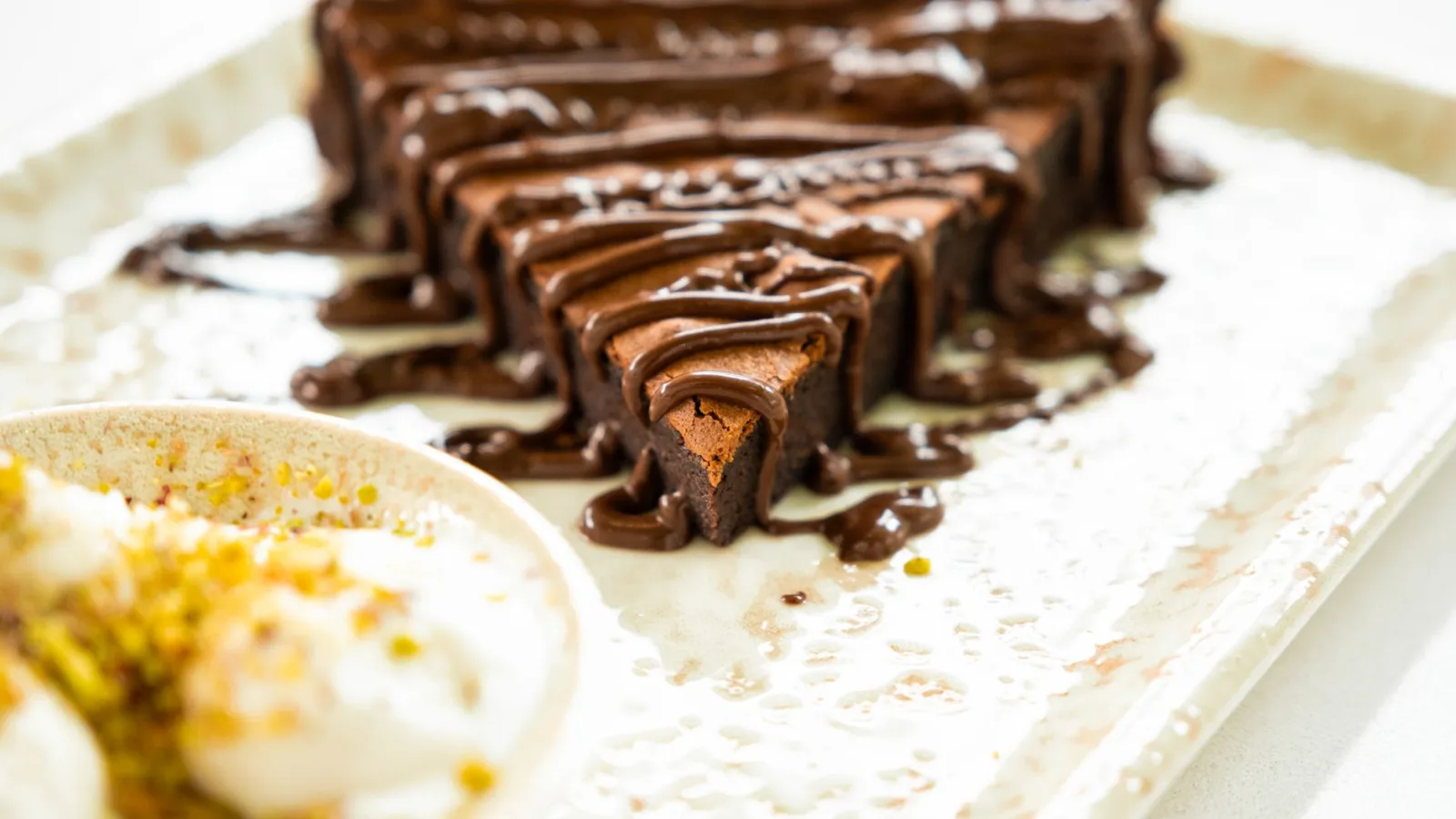
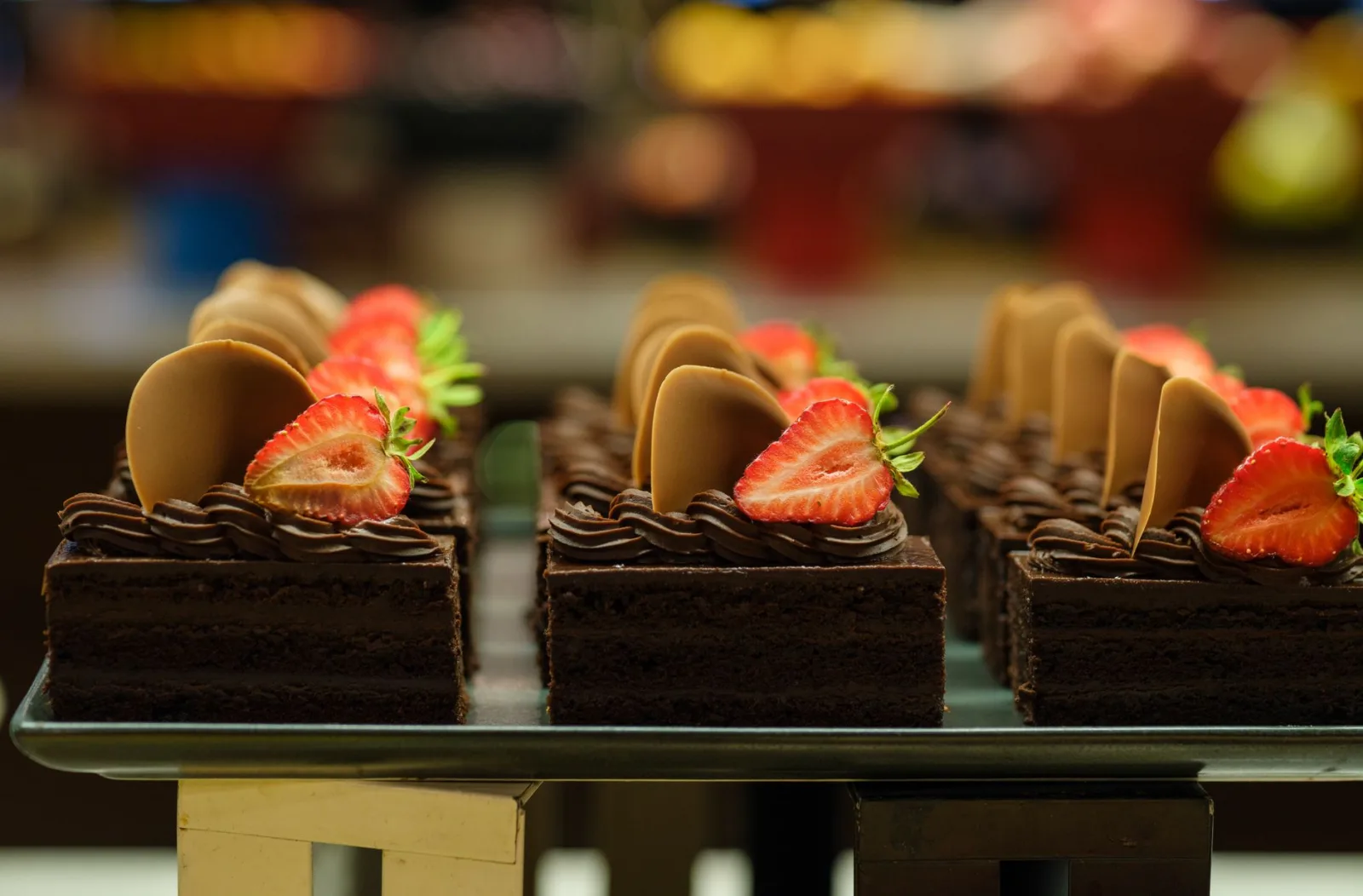
A properly moist chocolate cake
Moistness in a chocolate cake comes from three settings, not a secret ingredient: how little flour, how short the bake, and when you take it out.
Moistness is not a quality you add, it is a structure you avoid over-building. A dry cake is one where the flour and the eggs did their job all the way to the end.
The three settings that decide
How much flour. Flour gives structure. The less there is, the softer the cake, and the harder it is to turn out. Below 30 g per 200 g of chocolate you tip over into a flourless fondant, which is a different cake.
How long it bakes. A chocolate cake carries on cooking in its tin after it leaves the oven. Baking to the “perfectly clean skewer” stage always gives a dry cake once cool.
The temperature. At 180 °C the edges set fast while the centre lags. At 160 °C the bake is more even and leaves a far wider margin for error.
The ratios
For a 22 cm tin:
- 200 g dark chocolate, 55 %
- 150 g butter
- 150 g sugar
- 4 eggs
- 50 g flour
- a pinch of salt
Fifty grams of flour is little, and deliberately so. Most recipes use 100 to 120: the cake holds together better, travels better, and is noticeably less moist.
Separating the eggs changes a lot. Whipping the whites and folding them in last gives a lighter crumb without touching the flour. It is the one extra technique genuinely worth the trouble here.
Baking, in detail
160 °C, 22 to 25 minutes for this tin.
The cues, in the order you check them:
- The cake has risen and is just starting to come back down at the edges.
- The centre still wobbles slightly when you move the tin.
- A skewer 3 cm from the edge comes out almost clean; in the centre it comes out damp.
That last point surprises people. A clean skewer in the centre means you are five minutes past.
In my oven, which runs too hot underneath, I drop to 155 °C and add 3 minutes, with an empty tray on the shelf below. Without it the base is done ten minutes before the rest. It is the same reflex as for a cake without an oven: compensate for badly spread heat rather than suffer it.
Cooling, which matters just as much
Leave the cake in its tin for 15 minutes, then turn it out onto a rack. Turned out scalding, it breaks; left in the tin until cold, it goes damp from condensation.
A chocolate cake is better the next day. Wrapped once cool, it redistributes its moisture and the crumb evens out. That is true here and false for almost everything else in baking.
The mistakes that dry it out
Overheated chocolate. Beyond roughly 50 °C it turns grainy and releases its fat. The cake is then greasy on top and dry inside.
Too much sugar. Past 200 g for these quantities, sugar draws water and dries the crumb, which is counter-intuitive.
Opening the oven too early. Before 15 minutes, the drop in temperature sinks the centre, and it never comes back.
A tin that is too big. In a 26 cm tin the same batter is 2 cm deep and bakes in 15 minutes. The tin is part of the recipe.
Frequently asked questions
How does this differ from a fondant or a shop-bought moelleux? A fondant has even less flour, sometimes none, and is eaten warm. A moelleux keeps a crumb. Industrial versions add emulsifiers that hold water for weeks, which no home recipe does.
Can it be made without butter? Yes, with 120 g of neutral oil, applying the same logic as for brownies without butter. The crumb stays moist, the top crust disappears.
How long does it keep? Three days wrapped at room temperature, and it is better on the second. In the fridge it hardens: that is the butter crystallising, so take it out an hour before serving.
How do I know my oven is accurate? An oven thermometer costs about eight euros and settles the question once. Most domestic ovens are 20 to 30 °C off, and that gap explains half of all dry cakes.