Lemon loaf cake, moist and fragrant
A lemon loaf rarely fails for lack of lemon: it fails because the flavour goes in the wrong place, and because it dries out. The zest, the syrup, the bake and the glaze, in that order.
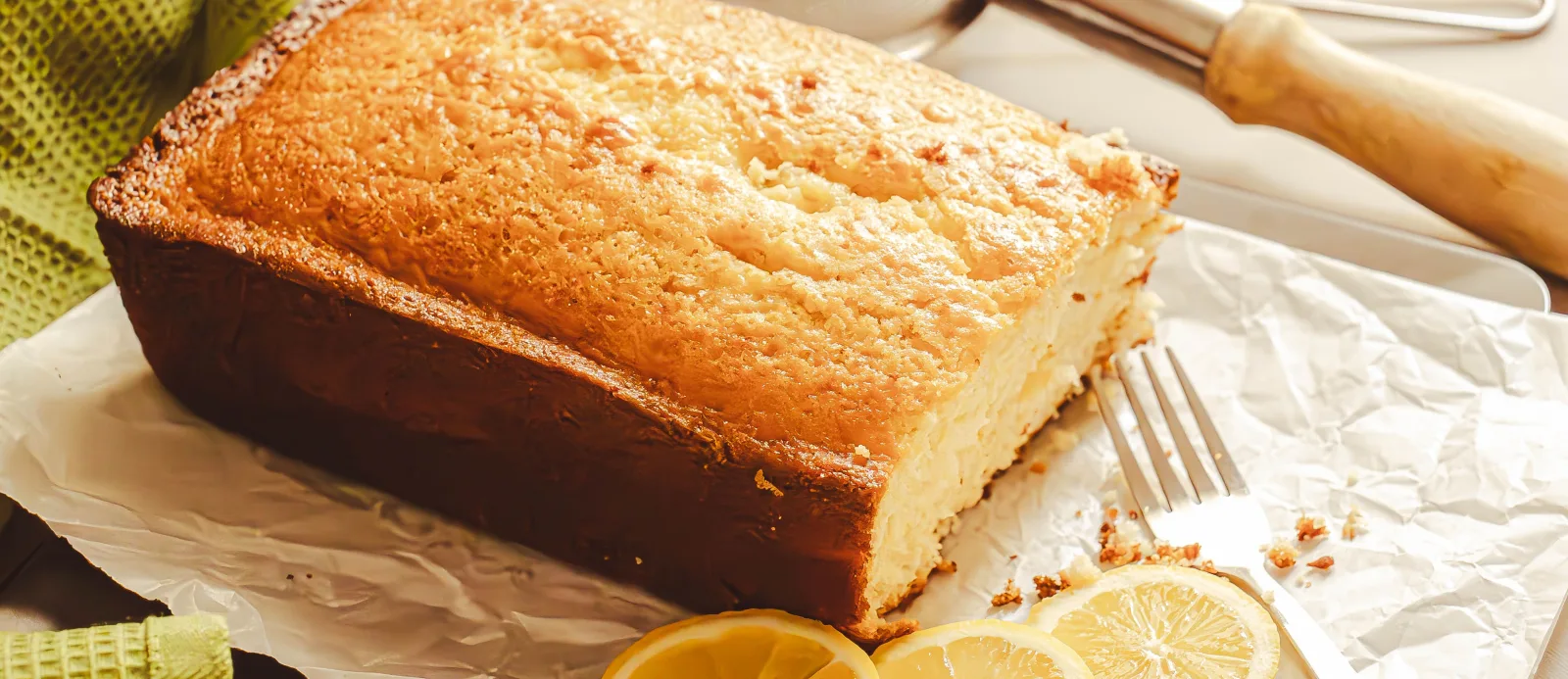
A lemon loaf cake nearly always disappoints in one of two ways: it tastes only faintly of lemon, even though the juice of two fruits went in, or it is dry by the next day. Both faults share the same origin: lemon flavour lives in the zest, not the juice, and a lemon loaf is finished after baking, with a syrup.
For a long time I found this cake bland, until I understood I was throwing away the most fragrant part of the fruit.
The flavour is in the zest
Juice brings acidity. The aroma comes from the essential oils held in the yellow skin of the lemon. A loaf made with juice alone is sharp and flat; a loaf made with zest really smells of lemon.
Rub the zest into the sugar with your fingertips for a minute, before anything else. The sugar turns damp and pale yellow: it has absorbed the oils from the zest, which will spread through the whole batter instead of staying in little threads.
Two precautions:
- choose unwaxed, untreated lemons, since it is the skin you are using;
- take only the yellow part, on a fine grater. The white pith just underneath is bitter.
The ratios
For a 24 to 26 cm loaf tin:
- 3 eggs, at room temperature
- 160 g sugar
- the zest of 2 lemons
- 120 g butter, melted and cooled to lukewarm, or 125 g crème fraîche
- 40 ml lemon juice
- 190 g flour
- 11 g baking powder
- 1 pinch of salt
For the syrup: the juice of one lemon (about 40 ml) and 40 g sugar.
The crème fraîche version gives a tighter, very moist crumb; the butter version a rounder flavour. Both hold up well.
Mixing
- Rub the zest into the sugar, as described above.
- Whisk the eggs with the lemon sugar for two to three minutes, until the mixture pales and thickens.
- Add the lukewarm melted butter, or the crème fraîche, then the lemon juice.
- Add the flour, baking powder and salt, and fold with a spatula just until no flour is visible.
Lemon juice poured onto cold butter splits the batter: it turns grainy, as if curdled. With eggs at room temperature and lukewarm butter, it does not happen. And if it does, a spoonful of the flour whisked in brings it back.
As with banana bread, the final mix must stay short: an overworked batter gives a springy crumb riddled with tunnels.
Baking
170 °C, 45 to 50 minutes, on a rack in the middle of the oven.
For the neat crack along the top, two methods: rest the batter in the fridge for an hour before baking, or draw a line of soft butter down the centre with a knife after ten minutes in the oven.
The loaf is done when a blade pushed into the centre comes out dry and the crack is no longer glossy. In my oven, which overheats at the bottom, I put an empty tray on the rack below: without it, the base browns long before the centre has set.
The syrup, the step that changes everything
This is the step most recipes forget, and it is the one that keeps a lemon loaf moist for several days.
- Heat the lemon juice with the sugar, just long enough to dissolve the sugar.
- Turn the loaf out while still hot, and set it on a rack over a plate.
- Prick the top with a wooden skewer, twenty times or so.
- Brush or spoon the hot syrup over the top and sides, in several goes.
A hot loaf soaks up syrup like a sponge. Cold, it lets it run off. It is the same principle as for madeleines, which are turned out hot so they do not trap their steam.
The glaze, on a cold loaf
Lemon glaze goes only on a loaf that has cooled completely, or it melts and turns see-through.
- 100 g icing sugar and 20 to 25 ml lemon juice, added a spoonful at a time.
The right consistency is that of thick honey: it should run slowly down the sides without covering everything. Too runny, and it soaks through the cake. With no icing sugar in the cupboard, finely blitzed caster sugar works, as I explain in icing without icing sugar.
What goes wrong, and why
| Symptom | Cause | Fix |
|---|---|---|
| Little lemon flavour | juice only, no zest | zest rubbed into the sugar |
| Dry loaf | no syrup, or baked too long | syrup on the hot loaf |
| Grainy, split batter | juice on cold butter | ingredients at room temperature |
| Bitterness | white pith grated in | zest the yellow part only |
| See-through glaze | poured on a warm loaf | wait until fully cool |
| Sunken centre | oven opened too early, or too much baking powder | do not open before 30 minutes |
Frequently asked questions
How long does a lemon loaf keep? Four to five days, wrapped in film once cold, at room temperature. Thanks to the syrup, it is often better on day two.
Can lime replace lemon? Yes, in the same quantity. Lime has a finer zest and a sharper scent, but less juice: allow three fruits instead of two.
Why is my lemon loaf dense? The batter was overmixed after the flour went in, or the eggs were not whisked long enough with the sugar. The initial whisking brings in the air; the final mix has to keep it.
Can it be frozen? Yes, unglazed and well wrapped, for up to two months. Glaze it after thawing.