Proper French custard tart
A flan pâtissier that slices cleanly and does not weep comes down to two things: how much starch, and a bake long enough to colour without boiling the custard.
The French flan pâtissier nearly always fails the same way: it wobbles too much, weeps water after an hour, or cracks as it cools. All three share one cause, the proportion of starch, and only one is fixed in the oven.
What holds a flan together
A flan pâtissier is not an egg-set custard like a crème caramel. It is a pastry cream baked in the oven, and it is the starch that structures it, not the eggs.
Starch swells and gels at around 85 °C. In gelling, it traps the water from the milk: that is what lets a flan slice cleanly instead of slumping.
Too little starch and it wobbles and releases water as it cools. Too much and it turns rubbery.
| Starch per litre of milk | Result |
|---|---|
| 60 g | Too loose, weeps |
| 90 to 100 g | Slices cleanly, stays creamy |
| 130 g and above | Firm, rubbery, tastes of flour |
I work at 90 g of cornflour per litre, with 4 whole eggs. Cornflour gives a silkier texture than wheat flour, which leaves a perceptible taste.
The custard
For a 22 cm deep tin:
- 1 litre whole milk
- 90 g cornflour
- 200 g sugar
- 4 eggs
- 1 vanilla pod, or 2 tsp extract
Whole milk is not negotiable. With semi-skimmed the flan is paler, less fragrant, and weeps more: the fat takes part in holding the water.
Infuse the vanilla in the hot milk off the heat, covered, for 20 minutes. A pod thrown into boiling milk gives far less flavour.
Pre-cooking the custard, the step that changes everything
Many recipes pour the raw custard onto the pastry and let the oven do the work. That is the main cause of a weeping flan.
The right method: cook the custard like a pastry cream, on the hob, until it thickens firmly and bubbles lazily for a full minute. The starch is then already gelled and the oven only has to colour it and finish setting it.
That minute of boiling counts: below it the starch has not finished its job and the flan will stay liquid in the centre however long it bakes.
The pastry, and the soggy base question
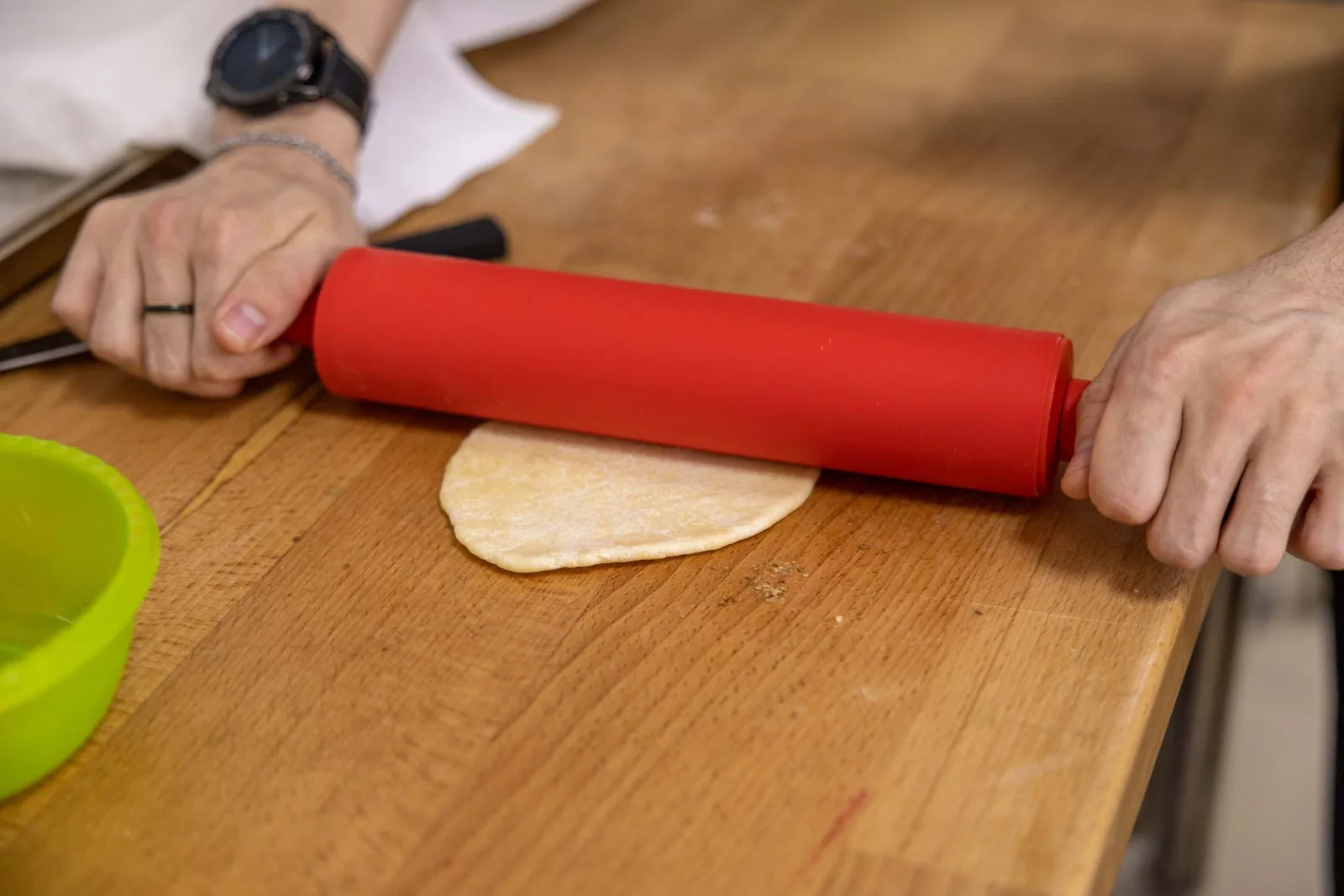
Shortcrust or sweet shortcrust both work, provided they are blind baked before receiving the custard. A raw base under a litre of cream has no chance.
Fifteen minutes at 180 °C with a weight, then five without, exactly as for a tart. The base must be dry to the touch and lightly golden.
A flan without pastry exists and holds perfectly well: the custard is structured enough to stand alone. Butter and line the tin with baking paper.
Baking
180 °C for 35 to 45 minutes, until the surface is frankly patched with brown, almost scorched in places. That is the signature of a bakery flan, and it is where most people stop too early out of caution.
What must not happen is the custard boiling in the oven: large bubbles at the surface mean the cream is splitting and will weep. If it boils, drop to 165 °C and extend the time.
The flan must cool completely before slicing, at least 4 hours and ideally overnight in the fridge. Sliced warm, it always slumps.
Frequently asked questions
Why does the surface crack? Too fierce a bake, or too abrupt a cooling. Leaving the flan in the switched-off oven with the door ajar for 15 minutes limits the thermal shock.
Can I use cream instead of milk? Replacing 200 ml of the milk with cream gives a richer, denser flan. Beyond that the texture turns heavy and loses the wobble that makes it interesting.
Why does mine taste of flour? Either wheat flour was used instead of cornflour, or the custard did not boil enough. A full minute of boiling is enough to remove that taste.
How long does it keep? Three days in the fridge, covered. It does not freeze: the starch releases its water on thawing and the texture is lost.