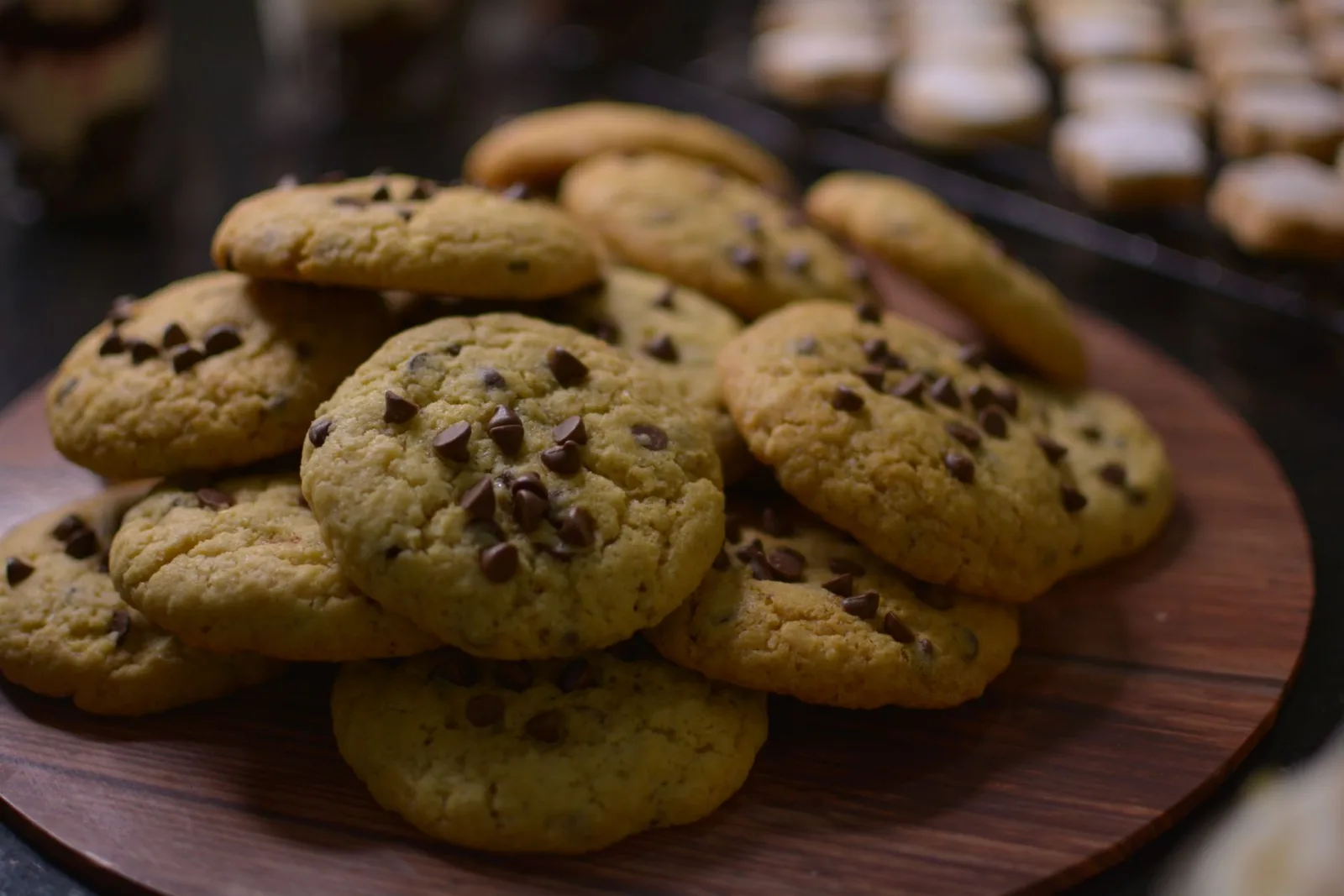
Cookies without brown sugar, still soft
Without brown sugar, a cookie spreads, pales and snaps. What brown sugar really brought, and how to replace it with white sugar and a spoonful of honey.
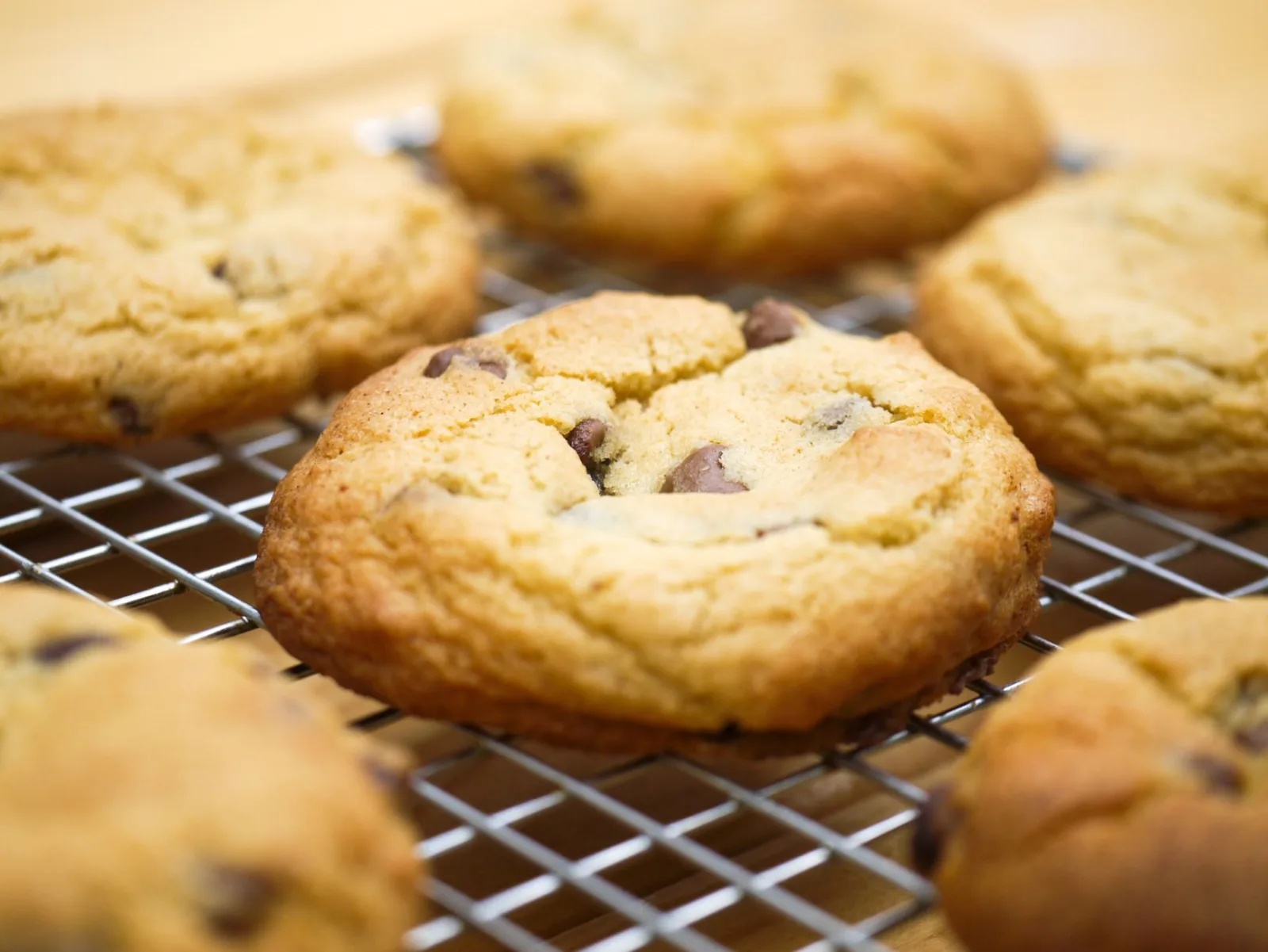
Cookies without brown sugar, made with white sugar alone, come out flatter, paler and crunchier. They are still good, but they are no longer quite cookies. To get the softness back, you only need to give white sugar what brown sugar used to bring: a little moisture and a little acidity, which a spoonful of honey or molasses does very well.
The first time, it was a Wednesday with no brown sugar in the cupboard and two children waiting for their snack. The tray came out with discs as thin as tuiles.
What brown sugar brought
The brown sugar in cookie recipes is white sugar coated in molasses. That molasses does three things:
- It holds water, which keeps the centre soft and tender.
- It is slightly acidic, and reacts with bicarbonate of soda: that is what makes the cookie rise, then sink into a crackled surface.
- It brings a caramel flavour that white sugar lacks.
White sugar melts, spreads and recrystallises as it cools. It is what makes the edges crisp. The balance between the two sugars is the first setting of American cookies: at 0 % brown sugar, you get a flat, brittle shortbread.
Not to be confused with cookies with no sugar at all, which raise a completely different problem, that of structure and bulk, as in the sugar-free chocolate cake. Here the amount of sugar does not change.
The French “sucre roux” trap
This is what translated recipes never say. In France, the packet labelled “sucre roux” is most often cassonade: dry, crunchy crystals with very little molasses. The brown sugar of American recipes actually corresponds to vergeoise, a soft, moist sugar that sticks to your fingers.
| Sugar | Moisture | Effect in a cookie |
|---|---|---|
| White sugar | none | spreads, crunchy, pale |
| Cassonade (demerara-style) | very low | almost like white sugar, with grains |
| Light vergeoise (light soft brown) | medium | soft, light caramel flavour |
| Dark vergeoise (dark soft brown) | high | very soft, strong flavour |
| Muscovado | high | dense, liquorice notes |
The direct consequence: with cassonade, you are already making cookies almost without brown sugar, without knowing it. That is often why cookies spread even when the recipe was followed to the gram.
Three ways to replace brown sugar
1. Make your own soft brown sugar. For 100 g of brown sugar called for, mix 100 g of white sugar with one tablespoon of molasses (about 20 g), working it with a fork until it looks like damp, even sand. This is the most faithful solution.
2. White sugar and honey. Without molasses, swap 20 g of the sugar for 20 g of runny honey. Honey holds water as well as molasses does and is acidic too. It browns faster: keep an eye on the end of baking.
3. White sugar alone, with the recipe corrected. This is the empty-cupboard solution. Three corrections make up a good part of the difference:
- add an egg yolk, whose fat and emulsifiers bring back softness;
- replace half the bicarbonate with baking powder, which carries its own acid and no longer relies on molasses;
- rest the dough longer, 24 hours in the fridge instead of one night.
The recipe, white sugar and honey version
For 12 cookies:
- 120 g butter, melted and cooled
- 130 g white sugar and 20 g honey
- 1 egg and 1 yolk
- 220 g flour
- ½ teaspoon bicarbonate of soda and ½ teaspoon baking powder
- 1 pinch of flaky salt
- 150 g dark chocolate, chopped
Mix the butter, sugar and honey, then the egg and yolk. Add the dry ingredients, mix just enough, then the chocolate. Rest for 24 hours in the fridge, already shaped into balls.
Resting does even more here than elsewhere: during that time the flour hydrates and the dough firms up, which limits the spread white sugar encourages. It is the same mechanism as in gluten-free cookies, where resting becomes compulsory.
Baking
180 °C, 10 to 11 minutes, with the balls taken out of the fridge at the last moment. The centre should look not quite done when it comes out: it finishes setting on the tray.
In my oven, which runs too hot underneath, I stack two baking trays. The air cushion between them protects the underside, which caramelises quickly with the honey.
Frequently asked questions
Can brown sugar be replaced with white sugar weight for weight? Yes, the weight stays the same. What changes is the texture: flatter, crunchier cookies. Adding an egg yolk and a spoonful of honey makes up for most of the difference.
Is French cassonade the same as brown sugar? In France it is labelled “sucre roux”, but it is not the brown sugar of American recipes. Cassonade is dry and contains little molasses. The brown sugar in cookie recipes corresponds to vergeoise, which is much moister.
Can I add more honey for an even softer cookie? Not beyond 30 g for this quantity. Honey is liquid: in excess it softens the dough, makes the cookies spread and browns them before the centre is cooked.
Why are my white sugar cookies flat? White sugar melts and spreads in the oven, especially if the dough is warm. A dough rested for 24 hours and taken out of the fridge at the last moment spreads far less.