Real American cookies
What separates an American cookie from a shortbread with chips: the brown-to-white sugar ratio, melted butter, and a rest that is not optional.
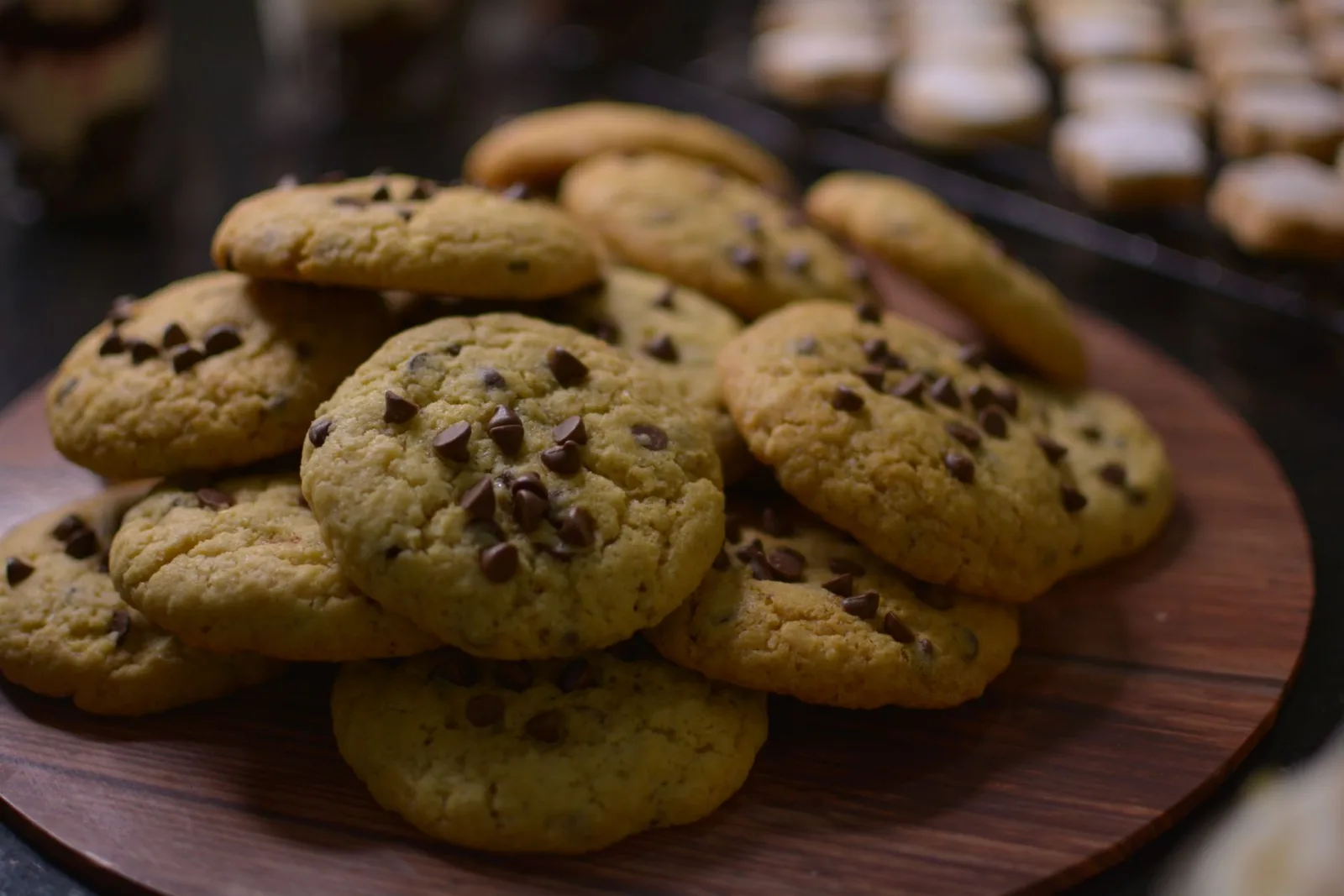
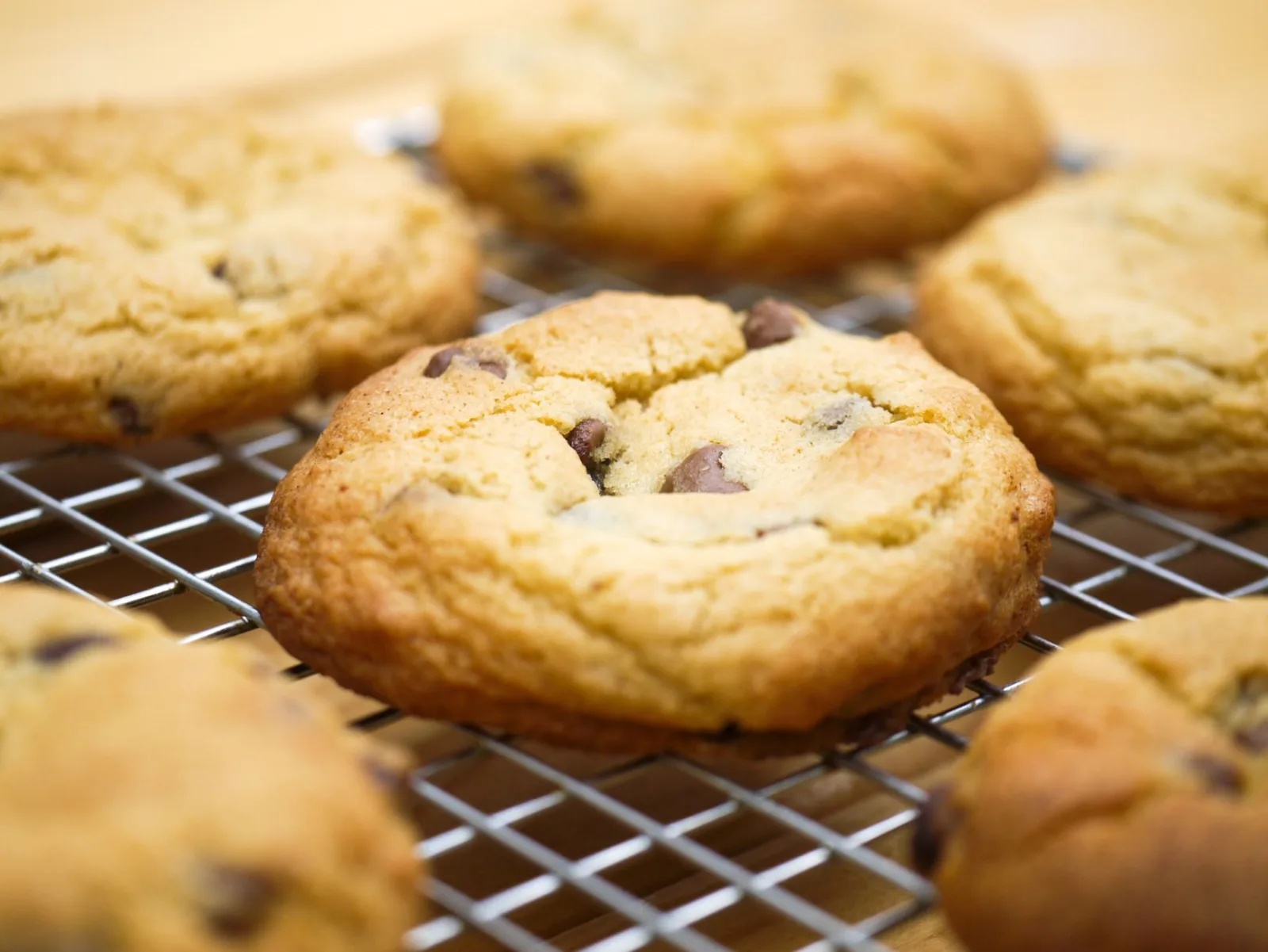
The American cookie has a precise identity: firm edges, a soft centre with a slight chew, a crackled surface. When you end up with a uniformly dry biscuit, that is not a failed cookie, it is a shortbread with chips. Three parameters separate the two.
The ratio between the two sugars
This is the first and by far the most decisive.
Brown sugar contains molasses, so moisture and acids. It holds water, which gives the chew, and it reacts with the bicarbonate, which gives the characteristic rise and collapse.
White sugar holds nothing. It melts, spreads and recrystallises: it is what gives the crisp edges and the crackled top.
| Brown / white ratio | Result |
|---|---|
| 100 / 0 | Very soft, almost cakey, little structure |
| 70 / 30 | The classic American balance |
| 50 / 50 | Crisper, sharper edges |
| 0 / 100 | A flat, brittle biscuit |
I work at 70 % brown and 30 % white. Below 50 % brown it is no longer an American cookie.
Melted butter, not softened
The second difference, and the one rarely spelled out.
Softened butter creamed with sugar incorporates air. That air lifts the dough: you get a domed, aerated biscuit, closer to shortbread.
Butter melted then cooled incorporates no air. The dough spreads more, stays dense, and the centre keeps that slightly molten quality. That is the texture you want.
The butter must be melted then brought back to room temperature before meeting the eggs. Poured scalding, it starts to cook the yolks.
The rest, again
Dough used straight away gives pale cookies that spread too much.
During the cold rest two things happen. The flour hydrates fully, which concentrates the flavour. And above all the sugars dissolve then reorganise, which makes the cookie brown more in the oven, so more caramel flavour.
Twelve hours minimum, ideally 24 to 36. The difference between dough rested 1 hour and 24 hours is dramatic, far greater than any change of ingredient. It is the same principle as for shortcrust pastry, except that here the rest serves flavour as much as texture.
The base, for a dozen
- 115 g melted butter, cooled
- 100 g brown sugar, 45 g white sugar
- 1 egg + 1 yolk
- 190 g flour
- 1/2 tsp bicarbonate of soda
- a good pinch of salt
- 150 g chocolate, chopped
The extra yolk brings fat and lecithin without adding water: it is what gives the silky centre. Without it the cookie is decent but drier.
Chopped chocolate from a bar beats shop-bought chips: chips contain stabilisers designed to stop them melting, which is exactly the opposite of what you want.
Baking
180 °C, 10 to 12 minutes, no more. The edges should be golden and set, the centre should look still raw and shiny when the tray comes out.
The cookie finishes baking on the tray over five minutes. If the centre is already matte in the oven, it will be dry once cool. That is the most common mistake, and it cannot be undone.
Balls of about 50 g, 6 cm apart, never flattened.
Frequently asked questions
Why do my cookies spread into a puddle? Butter too warm when mixed, or no rest. The two causes often combine. Dough taken cold from the fridge at the last moment does not spread.
And if they do not spread at all? Too much flour, almost always measured by volume rather than weight. A packed cup of flour can weigh 30 % more than a spooned one.
Can the dough be frozen? Yes, and it is the best way to work. Raw frozen balls bake straight from the freezer with two extra minutes. The rest continues even in the freezer.
Why are shop cookies still soft after a week? Industrial recipes use glucose syrup or invertase, which hold water for a very long time. At home, brown sugar and the extra yolk play that role, less durably: a home-made cookie is at its best on the day.